Encyclopedia
Encyclopedia of foreign language learning
Human language is the greatest technology ever invented. It’s what makes us different from other animals. We can use sounds to express ideas in our minds and it allows us to share discoveries and inventions with people across the world and through time. It is the only formal language that has acoustic representation, and the only animal language that is built out of cultural symbols. Language acquisition is also special. Every parent watching their children grow wonders how they are capable of learning such a complex thing without any instruction in such a short time. But the same parents sometimes struggle becoming even conversational in a foreign language. Despite language learning being a million years old, plus 200 years of serious research, the demand, and the developments in technology and AI, people nowadays still struggle with learning languages. In this encyclopedia we will see how language evolved and formalized, and what we currently really understand about learning in general, language learning and language acquisition. The success of language learning lies in the way you learn. In order to be successful, you have to take language learning into your own hands and use the methods that work.-
 Dictionaries: Your Essential Guide
A dictionary is a reference work that records the words of a language with their meaning, spelling, pronunciation and use. The main types (monolingual, bilingual, learner's, collocation dictionaries and thesauruses), the history from Cawdrey and Johnson (1755) through the Oxford English Dictionary to the corpus revolution, print versus online, and how each kind helps you learn a language.
-
 Didactique des langues: Language Teaching Methodology
Didactique des langues is the French discipline that studies the teaching and learning of languages — broader than a set of methods. Its distinctive concepts (didactic transposition, the didactic contract), its key figures (Galisson, Puren, Coste, the CREDIF), and how it differs from Anglophone applied linguistics.
-
 Discourse Analysis in Language Learning
Discourse analysis studies language above the sentence: Harris' 1952 coinage, Halliday and Hasan's cohesion and coherence, conversation analysis with turn-taking and adjacency pairs, genre and register, discourse competence in Canale's model — and why discourse markers and the machinery of real talk belong in a language learner's curriculum.
-
 Distance Learning in Language Education
Distance learning means studying a language while separated from your teacher in space, and often in time. This is its history — from 19th-century correspondence courses through radio, TV and MOOCs to today's apps and tandem exchange — and what the research says actually makes it work.
-
 Chinese: A Journey Through Language
Chinese is not one language but a family of Sinitic varieties — Mandarin, Wu, Cantonese and more — sharing one character-based script. A guide to hanzi, the four tones, pinyin, isolating grammar and what makes Chinese hard to learn.
-
 Classroom Research for Language Learning
Classroom research studies what actually happens when languages are taught and learned in a room together — how we observe it (interaction analysis, the COLT scheme), what teacher-researchers do with action research, and what looking inside the "black box" revealed about interaction and focus on form.
-
 Cognitive Code Theory in Language Learning
Cognitive code theory (cognitive code-learning theory) is a 1960s view of foreign-language learning as the conscious acquisition of a system of rules — the "code" — through study, analysis and meaningful practice, not habit formation through drills. Named by John B. Carroll in 1966 as the alternative to the audiolingual habit theory, it never became a codified method, but it rehabilitated learning grammar with understanding.
-
 Cognitive Linguistics in Language Learning
Cognitive linguistics treats language not as a separate mental module but as part of general cognition: conceptual metaphor (Lakoff and Johnson), cognitive grammar and constructions, and what motivated meanings mean for learning prepositions, idioms and whole sentences.
-
 Common European Framework of Reference (CEFR)
The Common European Framework of Reference (CEFR) is the Council of Europe's six-level scale — A1 to C2 — that describes what a learner can actually do in a language through "can-do" descriptors, from the 2001 framework to the 2020 Companion Volume that added mediation, plus-levels, and moved past the native speaker as the yardstick.
-
 Communicative Language Teaching for Language Learners
What communicative language teaching (CLT) means in practice for a language learner: put communication before grammatical perfection, work on fluency, tolerate error — plus self-study techniques (information-gap, role-play, communicative tasks) and how to combine them with systematic review.
-
 Community Language Learning (CLL)
Community Language Learning (CLL): the method Charles Curran built in the early 1970s from Carl Rogers and humanistic counselling psychology — teacher as counsellor, learner as client, the whisper-and-record technique, the five stages, why it lowers anxiety, and where it sits among the designer methods of the 1970s.
-
 Competence and Performance in Language Learning
Competence and performance are Chomsky's 1965 distinction between the internal system that lets a speaker generate an unlimited number of sentences and the messy, error-prone act of using it. This is where the modern definition of "knowing a language" comes from — and where Hymes, Canale and Swain, and Widdowson pushed back, arguing that real knowledge also means knowing when and how to say things. The debate still shapes how we teach and test, and why accuracy and fluency are not the same thing.
-
 Computer Assisted Language Learning (CALL)
Computer-assisted language learning (CALL) is the use of computers to support language teaching and learning. This is its history — from 1960s mainframe drills to today's mobile apps and AI — and what research says actually makes it work.
-
 Content and Language Integrated Learning (CLIL)
Content and language integrated learning (CLIL) means teaching school subjects through a foreign language: the term David Marsh coined in 1994, Coyle's 4Cs framework and the language triptych, the Eurydice 2006 survey, hard versus soft CLIL, Dalton-Puffer's research findings, Bruton's selection critique, and Polish bilingual streams as de facto CLIL.
-
 Content-Based Instruction in Language Learning
Content-based instruction (CBI) is the North American tradition of teaching a language through subject matter: its three classic models — theme-based, sheltered and adjunct — from Brinton, Snow and Wesche (1989), its roots in Canadian immersion and Krashen's comprehensible input, how it differs from Europe's CLIL (Cenoz, Genesee and Gorter's 'same or different?' debate), and what the research says about content-driven language learning.
-
 Conversation Analysis in Language Learning
Conversation analysis (CA) studies the hidden machinery of ordinary talk: Sacks, Schegloff and Jefferson's turn-taking, adjacency pairs and preference, the organization of repair (self- and other-initiated), and CA-for-SLA — Firth and Wagner, Markee and Kasper — which treats second-language learning as something visible in interaction, plus why authentic talk beats the tidy dialogues of a textbook.
-
Corpus Linguistics for Language Learning
Corpus linguistics studies language through large collections of real text. From the Brown Corpus (1961) to the British National Corpus and COCA: what concordances, collocation and frequency reveal, how corpus data reshaped dictionaries and coursebooks (Sinclair's COBUILD and the idiom principle), Tim Johns's data-driven learning, and what frequency lists and authentic collocations mean for learners.
-
 Creoles: A Simplified Introduction
A creole is a full native language born when children turn a makeshift pidgin into a complete grammar: nativization, Derek Bickerton's language bioprogram hypothesis and the case of Nicaraguan Sign Language, the substrate–superstrate critique, and what creoles reveal about the innate human capacity for language.
-
 Cultural Awareness in Language Learning
Cultural awareness in language learning is the recognition that meaning is culturally conditioned: Byram's intercultural communicative competence and the five savoirs, the intercultural speaker who replaces the native-speaker ideal, cross-cultural pragmatics and Brown and Levinson's politeness theory, the cautious use of Hofstede's cultural dimensions, a measured note on linguistic relativity, and what the learner actually does with register, idiom and taboo.
-
 Cultural Studies: Exploring Cultural Phenomena for Language Learning
Cultural studies as content in language learning: the target culture's products and phenomena — literature, film, history, art and everyday life — treated as material to study. Big-C versus little-c culture, the products–practices–perspectives model, the iceberg of visible and hidden culture, authentic materials, and the shift from memorizing facts about a country to interpreting it. Distinct from cultural awareness, the competence a learner brings to communication.
-
 Effective Communication Strategies for Language Learners
Communication strategies are the techniques learners use to keep talking when a word or structure is missing — paraphrase, circumlocution, borrowing, appeal for help, gesture. This entry maps Tarone's (1977) taxonomy and Faerch and Kasper's (1983) achievement-vs-reduction distinction, situates them in Canale and Swain's strategic competence, weighs the teachability debate (Dörnyei vs. Kellerman), and explains why using strategies protects fluency.
-
 Language Learning in the Classroom
How language learning actually works in a classroom: the dynamics of teacher–student interaction and the IRF exchange, pair and group work, the advantages a shared room provides (structure, feedback, speaking practice, peer accountability), its built-in limits (group pace, scarce individual talk time), and how a classroom compares with self-study and online learning.
-
 Noam Chomsky and his Influence on Language Learning
Noam Chomsky never proposed a language teaching method, yet he reshaped the field: his 1959 review of Skinner ended behaviorist drilling, competence vs performance redefined the goal of learning, and his ideas fed Krashen and communicative language teaching — even as Chomsky himself doubted linguistics could tell teachers how to teach.
-
 Beginner language learners
Beginner language learners are at CEFR levels A1–A2 — absolute beginners with no prior knowledge, or false beginners with some fragile exposure. What happens at the start (Krashen's silent period, comprehensible input, a high-frequency vocabulary core), the typical challenges (foreign language anxiety, cognitive overload), what actually works (fixed phrases, spaced repetition) and realistic expectations.
-
 Behaviorism in foreign language learning
How behaviorism shaped language teaching: Skinner's habit formation and reinforcement in the classroom, the audio-lingual method and its pattern drills, Robert Lado's contrastive analysis (1957), Skinner's teaching machines and programmed instruction, the Chomsky and Rivers critiques, and what survived — drill, feedback and reinforcement.
-
 Bilingual Education: Learning in Two Languages
Bilingual education means teaching school subjects in two languages: the models from transitional programs to two-way immersion and CLIL, the Canadian St. Lambert experiment and its fossilization lesson, Thomas and Collier's long-term findings, Cummins' interdependence hypothesis, and the translanguaging turn.
-
 Bilingualism: More Than Just Speaking Two Languages
Bilingualism is far more than speaking two languages: how researchers define it, the types (simultaneous vs sequential, balanced vs dominant), Grosjean's holistic view, the honest state of the "bilingual advantage" debate, and why the world's bilingual majority makes monolingualism the exception, not the rule.
-
 The Bilingual Method: Simplifying Language Learning
The bilingual method: C.J. Dodson's 1967 technique that turned the mother tongue into a precision tool of the language lesson — the sandwich technique (L2 sentence, L1 meaning, L2 sentence), the Aberystwyth experiments behind it, Butzkamm's campaign against the mother-tongue taboo, and why modern research has vindicated Dodson.
-
 Gamification in language learning apps
Gamification in language learning apps: what points, badges, streaks, leagues and leaderboards actually do. A balanced look at the evidence — Deterding's definition, Hamari's "it depends on context" review, the overjustification effect from Deci and Ryan, and Mogavi's study of how streak-keeping can crowd out real learning. The line: gamification sustains a habit, it does not replace learning.
-
 Memory consolidation: Matthew Walker and why we learn during sleep (2017)
Memory consolidation is how the brain stabilizes what you learned while you sleep. Slow-wave and REM sleep, the active systems consolidation model, the classic Jenkins & Dallenbach experiment, targeted memory reactivation, and what Matthew Walker's "Why We Sleep" gets right and wrong.
-
 Pirahã language: Daniel Everett an why language is a cultural invention (2017)
Pirahã, an Amazonian language studied by Daniel Everett, is said to lack recursion, number words and colour terms — the case Everett used to argue that language is a cultural invention, not innate. What the claim says, why linguists contest it, and what it means for learning a language.
-
 Steven Pinker: Language is an instinct (1994)
Steven Pinker's 1994 book The Language Instinct argues that language is a biological adaptation shaped by natural selection, not a cultural invention: the mentalese hypothesis, children who creolise and grammaticalise, the Pinker & Bloom case against Chomsky's spandrel, Words and Rules, and what it all means for learning a language.
-
 The bilingual brain: Arturo Hernandez and why native language is different from foreign language (2013)
The neurobiology of a first versus a second language, through Arturo Hernandez's The Bilingual Brain (2013). Whether the two languages run on one system or two, how age of acquisition (Kim et al. 1997) and proficiency (Perani, Abutalebi) shape where a second language lives in the brain, the control network that switches between them, and what all of this means for an adult learner who must route a new language through declarative memory before it becomes automatic.
-
 What does science say: The best method to learn a language
There is no single best method to learn a language — but research points to a handful of principles that reliably work: comprehensible input, spaced repetition, active recall, learning in sentences and interleaving. The best method is the one you apply consistently.
-
 Behaviorism: Language is a behaviour (1938)
Behaviorism as a theory of learning: John B. Watson's 1913 manifesto, Pavlov and classical conditioning, Skinner's operant conditioning and Verbal Behavior (1957), Chomsky's 1959 review, and the lasting legacy of habit, reinforcement and drill in language teaching.
-
 Benny Lewis and the polyglot community: Language learning is global (2013)
Benny Lewis, the Irish blogger behind Fluent in 3 Months, popularised the "speak from day one" idea and helped turn language learning into a global online community — from the Polyglot Conference to YouTube. An honest look at his real contribution, the "fluent in three months" marketing claim, and the input-versus-output debate.
-
 Communicative language teaching (CLT): Language is communication (1970s–1980s)
Communicative language teaching (CLT) redefined the goal of language learning as communicative competence: its genesis in the Council of Europe and Wilkins' notional-functional syllabus, Hymes' answer to Chomsky, Canale and Swain's four competences, the strong and weak versions, and the critiques that produced task-based teaching and focus on form.
-
 Comprehensive input: Stephen Krashen, learning and acquisition (1982)
Stephen Krashen's Monitor Model (1982) hypothesis by hypothesis: acquisition vs. learning, the monitor, the natural order of grammar acquisition and the affective filter — what each one claims, the research behind it (Dulay & Burt, Horwitz) and the criticism it drew.
-
 Constructivism: Language is a mental model (1973)
Constructivism as a theory of learning: Jean Piaget's cognitive constructivism (schemas, assimilation and accommodation, stages), Lev Vygotsky's social constructivism (the zone of proximal development, scaffolding, inner speech), Jerome Bruner's discovery learning and spiral curriculum, and how the idea that learners build knowledge rather than receive it reshaped the language classroom.
-
 Declarative vs. procedural memory (1957)
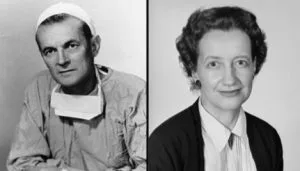
Declarative memory is knowing-that, procedural memory is knowing-how. The 1957 Scoville and Milner study of patient H.M. (Henry Molaison), Milner's mirror-drawing experiment, Squire's taxonomy of memory, Ullman's declarative/procedural model of the language lexicon and grammar, and what proceduralization means for learning a language.
-
 Desirable difficulties: Robert A. Bjork (1994)
Desirable difficulties: Robert A. Bjork's 1994 theory that conditions which slow practice down — spacing, retrieval, interleaving, generation, variation — produce more durable learning. Storage vs retrieval strength, when difficulty stops being desirable, and the fluency illusion.
-
 Duolingo: Expansion of language apps (2011)
Duolingo, founded in 2011 by Luis von Ahn and Severin Hacker, turned language learning into a free, gamified daily habit for over 100 million people. Its crowdsourced-translation origins, the gamification model, and what research says about how well it teaches.
-
 Formulaic sequences: Language consists of chunks (2005)
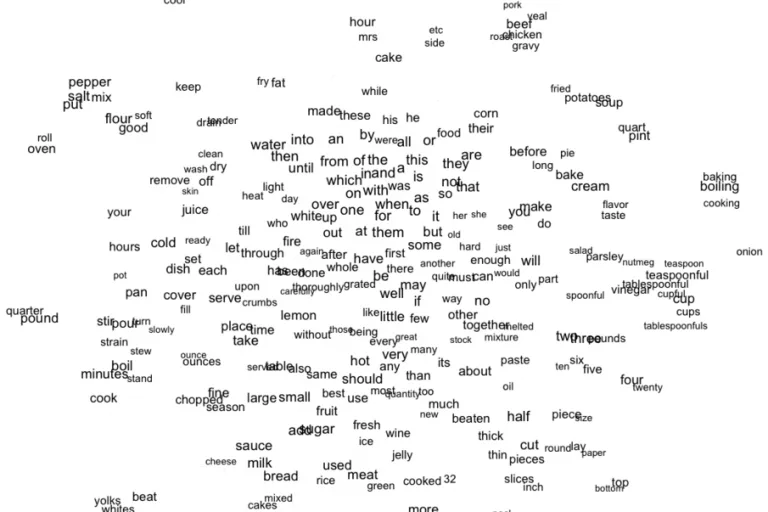
Formulaic sequences are multi-word chunks — collocations, idioms, phrasal verbs and fixed phrases — stored and retrieved whole from memory rather than built word by word. From Pawley and Syder to Alison Wray: the concept, the corpus estimate that roughly half of speech is prefabricated, and why learning sentences beats learning isolated words.
-
 How long does it take to learn a language: Foreign Service Institute (1947)
The Foreign Service Institute groups languages by how many hours English speakers need to reach professional proficiency: roughly 600–750 hours for Spanish, French, Italian or Dutch, about 900 for German, and up to 2,200 for Arabic, Chinese, Japanese and Korean. What those hours really mean, and how they translate to 30 minutes a day.
-
 Language is innate: Nativism and Noam Chomsky (1950)
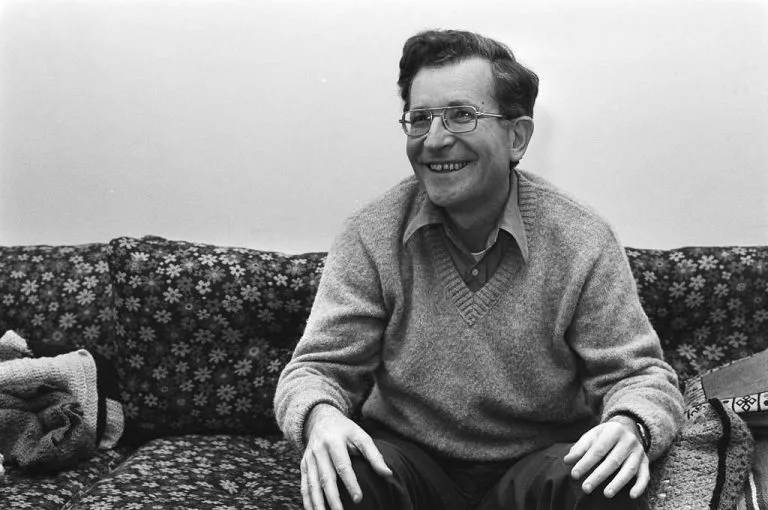
Nativism is the theory that the capacity for language is innate: Noam Chomsky's poverty-of-the-stimulus argument, the Language Acquisition Device (LAD) and Universal Grammar, the usage-based and Pirahã critiques, and what the unresolved debate means for learning a language.
-
 Meaningful learning vs. rote learning: David Ausubel, We learn through association (1968)
Meaningful vs rote learning: David Ausubel's subsumption theory and Educational Psychology: A Cognitive View (1968), the three conditions of meaningful learning, advance organizers, Craik and Lockhart's levels of processing (1972), and why words learned in sentences outlast words learned from lists.
-
 Motivation and goal setting: Dan Ariely (2008)
Motivation and goal setting in language learning: what makes people keep going. An honest look at Dan Ariely (and the fabricated-data scandal), plus the harder evidence — Locke & Latham goal-setting theory, Deci & Ryan self-determination theory, implementation intentions, pre-commitment and habits.
-
 PLATO: The first language learning program (1960)
PLATO (Programmed Logic for Automatic Teaching Operations), launched in 1960 at the University of Illinois, was the first computer system used to teach foreign languages — the starting point of computer-assisted language learning (CALL).
-
 Spaced repetition: The power of repetition (1932)
The history of spaced repetition: C. A. Mace's 1932 The Psychology of Study gave the first practical prescription of expanding review intervals. Spitzer's experiment on 3,605 pupils, Pimsleur's graduated intervals, the Leitner box, SuperMemo — and what modern research says.
-
 SuperMemo: Piotr Woźniak and the first app that really works (1990)
SuperMemo, created by Piotr Woźniak in 1987, was the first spaced repetition software — a program that computed the optimal moment to review each item. Its openly published SM-2 algorithm still schedules reviews in Anki and countless other apps.
-
 Tell Me More and Rosetta Stone: The first commercial language apps (1987)
Tell Me More (Auralog, France 1987) and Rosetta Stone (USA 1992) turned computer-assisted language learning into a commercial product: multimedia CD-ROM courses with speech recognition and immersion, sold in boxes long before the smartphone era.
-
 The audio-lingual method: Drilling structures (1946)
The audio-lingual method (ALM), also called the Army Method, is a way of teaching foreign languages through intensive oral drilling of sentence patterns — repetition, substitution and transformation drills — grounded in behaviourist psychology and structural linguistics. Born in US wartime language programs, it dominated classrooms in the 1950s and 1960s.
-
 The Chomsky hierarchy and normative grammar (1956)
The Chomsky hierarchy is a classification of formal grammars into four nested types (Type 0 to Type 3), introduced by Noam Chomsky in 1956. What each type means, which automata recognize them, and how generative grammar differs from normative grammar.
-
 The critical period: It gets more difficult with age (1959)
The critical period hypothesis holds that language is acquired most easily in early life: its origins in Penfield, Roberts and Lenneberg, the evidence from Genie and from Johnson & Newport, the 2018 reanalysis of 2/3 million speakers, and why age affects accent, grammar and vocabulary very differently.
-
 The learning styles: VAK is dead (2009)
The idea that matching teaching to a pupil's visual, auditory or kinesthetic style improves learning has no evidence behind it. Pashler et al. (2009), the meshing hypothesis, why the myth persists, and what actually works: dual coding, retrieval practice and spacing.
-
 Age and Language Learning
How age shapes language learning at every stage of life — children, teenagers, adults and seniors — why the popular "younger is always better" verdict is more nuanced than it sounds, and what really does depend on the age you start.
-
 Applied Linguistics: From Theory to Practice
Applied linguistics is the interdisciplinary field that solves real-world language problems — from language teaching and second-language acquisition to translation, speech therapy, language policy and NLP. Its history, its two-way relationship with theory, and what it means for learning a language.
-
 Attitudes and Language Learning
How attitudes shape language learning: the evaluative feelings toward a language, its speakers, the classroom and yourself that feed motivation. Gardner and Lambert on integrative and instrumental motivation, foreign-language anxiety (Horwitz), growth vs fixed mindset (Dweck) and learner beliefs.
-
 Audio-Visual Language Teaching: A Comprehensive Overview
The audio-visual method (SGAV — Structuro-Globale Audio-Visuelle) taught a foreign language by joining image and sound: film-strip pictures projected in step with tape-recorded dialogues, so that meaning came from a situation, not from translation. Developed in 1950s France by Guberina and CREDIF, it was the European cousin of American audiolingualism — and left its mark on multimedia language learning.
-
 Autonomy in Language Learning
Learner autonomy in language learning: what it means to take charge of your own studying. Henri Holec's founding definition, David Little on autonomy as a psychological capacity (not isolation), the tie to motivation and self-determination theory, Rebecca Oxford's learning strategies, and what autonomy really looks like in the age of apps.
-
 Beginning of language: from Homo erectus to Homo sapiens
When did language begin? It is one of the hardest questions in science — so speculative that the Paris Linguistic Society banned the topic in 1866. This article separates what we can know from what we cannot: the indirect anatomical and archaeological evidence (the hyoid bone, FOXP2, Blombos ochre), the cautious dating from Homo erectus to Homo sapiens, the gesture-first and vocal theories, and the Pinker & Bloom case for language as a slow adaptation against Chomsky's sudden-leap view.
-
 Ferdinand de Saussure: The father of linguistics (1857)
Ferdinand de Saussure (1857–1913), the Swiss founder of modern linguistics: his life, the Course in General Linguistics, langue and parole, the arbitrary sign, synchrony and diachrony, and what his ideas mean for learning languages.
-
 International Phonetic Alphabet (1888)
What the International Phonetic Alphabet (IPA) is: its origins in 1888, how to read the IPA chart, how dictionaries use it, and what it means for language learners.
-
 Language aptitude: why some people excel at learning languages (1959)
Language aptitude is real but it is not destiny: John Carroll's four-part model and the MLAT (1959), the modern reframing around working memory and Robinson's aptitude complexes, why aptitude matters more for adults than children, and the evidence that effort and method outweigh talent for most learners.
-
 Language is in the brain: Paul Broca and Carl Wernicke (1870)
In 1861 Paul Broca tied speech production to the left frontal lobe through his patient Leborgne ("Tan"); in 1874 Carl Wernicke tied comprehension to the temporal lobe. The classic Wernicke-Geschwind model and its modern revision into a distributed language network (Hickok and Poeppel's dual streams, Fedorenko), what the aphasias reveal about the architecture of language, and why producing and understanding a language are partly separate circuits you have to train separately.
-
 Learning and Teaching Second Languages
Second language acquisition (SLA) is the study of how people learn a language beyond their first: interlanguage and error analysis, the natural order of acquisition, the input, interaction and output hypotheses, and the roles of age, aptitude and motivation.
-
 The direct method: Maximilian Berlitz (1900)
The direct method: how Maximilian Berlitz (1852–1921) turned a chance discovery at his Providence school of 1878 into teaching entirely in the target language — its principles, its critics, what research says about its effectiveness, and its legacy in immersion and communicative teaching.
-
 The forgetting curve: Hermann Ebbinghaus (1885)
The forgetting curve shows how fast memory fades without review. Hermann Ebbinghaus and his 1885 experiment, the mathematics of the curve, the 2015 replication by Murre and Dros, and how spaced repetition flattens it.
-
 The grammar-translation method: The first official learning method (1880)
The grammar-translation method: how the Prussian textbook tradition of Meidinger, Seidenstücker, Ollendorff and Karl Plötz turned Latin-style rule learning and sentence translation into the first named method of language teaching — its principles, the Reform Movement revolt of 1882, and why translation itself has since been rehabilitated.
-
 The Grimm brothers: Rockstar linguists (1822)
Jacob and Wilhelm Grimm were far more than fairy-tale collectors: Grimm's law of 1822, the comparative method, the Deutsches Wörterbuch, the tales as a philological project, and what Germanic sound shifts mean for learning German and Dutch.
-
 Adult Language Learning
Adults do not learn languages worse than children — they learn differently: faster at the start, with real advantages in analysis, strategy and world knowledge, and genuine challenges in time, anxiety and accent. What the research from Snow, DeKeyser, Knowles and others actually shows, and how to learn a language as an adult.