International Phonetic Alphabet (1888)
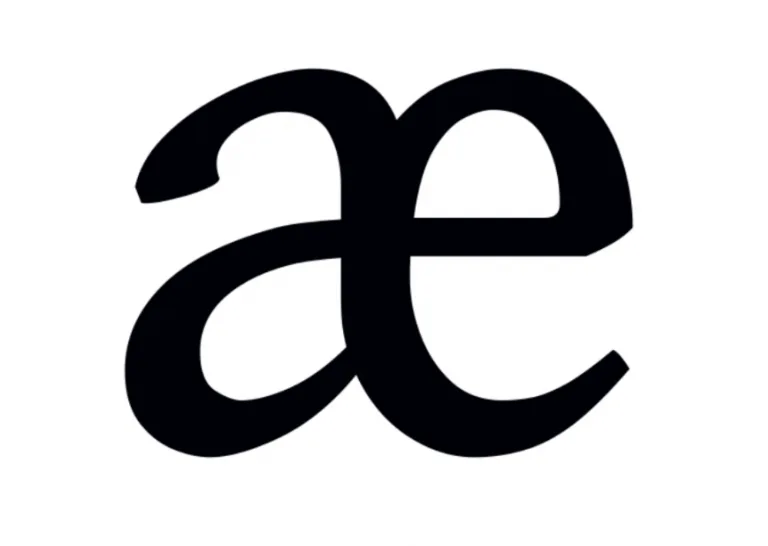
The International Phonetic Alphabet (IPA) is a standardized system of symbols for writing down the sounds of spoken language. It was first published in 1888 by the International Phonetic Association and is built on one guiding principle: one distinctive sound, one symbol — the same symbol keeps the same value no matter which language is being transcribed. Where ordinary spelling is ambiguous (the English letter sequence ough can be pronounced in at least six ways), an IPA transcription such as /θruː/ for through is not. Today the IPA is the reference notation for linguists, dictionary makers, speech therapists, singers and language teachers worldwide.
History: from a Paris teachers' club to a global standard
The IPA grew out of the rapid development of phonetics in the 19th century — the same century in which comparative linguists such as the brothers Grimm first described systematic sound laws. In 1886 a small group of language teachers in Paris, led by the French phonetician Paul Passy, founded what would become the International Phonetic Association (it adopted that name in 1897). Their motivation was practical, not academic: they wanted phonetic notation in schools, so that pupils could learn realistic foreign pronunciation instead of guessing sounds from spelling. That aim is still the practical one: if you want to see what IPA looks like when it is used to grade your own speech sound by sound, see hearing yourself, the oldest pronunciation trick.
In 1888 the association published the first version of its alphabet in its journal Le Maître Phonétique, together with the principle that each symbol should have the same value across languages. The design drew heavily on the Romic alphabet of the English phonetician Henry Sweet, which in turn descended from the notation systems of Alexander John Ellis and Isaac Pitman. That is why the IPA looks familiar: it is based on the Latin alphabet, extended with modified letter shapes and a few Greek borrowings.
The alphabet has been revised repeatedly as phonetic theory matured. The most important overhaul came at the Kiel Convention in 1989, which reorganized the chart into essentially its modern form; smaller updates followed in 1993 and 1996. The most recent new symbol — ⱱ, the labiodental flap — was added in 2005, and the current official chart is the version re-issued in 2020.
How to read the IPA chart
The association's core product is a single-page reference known as the IPA chart. The current alphabet contains 107 letters for consonants and vowels, 31 diacritics that modify them, and 17 signs for features such as stress, length and tone. No known language uses anywhere near all of these sounds — the chart is a map of what human vocal tracts can do, not of any one language. It has several sections:
- Pulmonic consonants — the large main table. Columns show where a sound is made (from the lips, bilabial, to the throat, glottal); rows show how it is made (plosives like /p/ and /k/, nasals like /m/ and /ŋ/, fricatives like /f/, /θ/ and /ʃ/, and so on). Where a cell holds two symbols, the left one is voiceless and the right one voiced — /s/ versus /z/.
- Non-pulmonic consonants — sounds made without air from the lungs: the clicks of southern African languages (ʘ, ǀ, ǃ), voiced implosives (ɓ, ɗ) and ejectives (pʼ, kʼ).
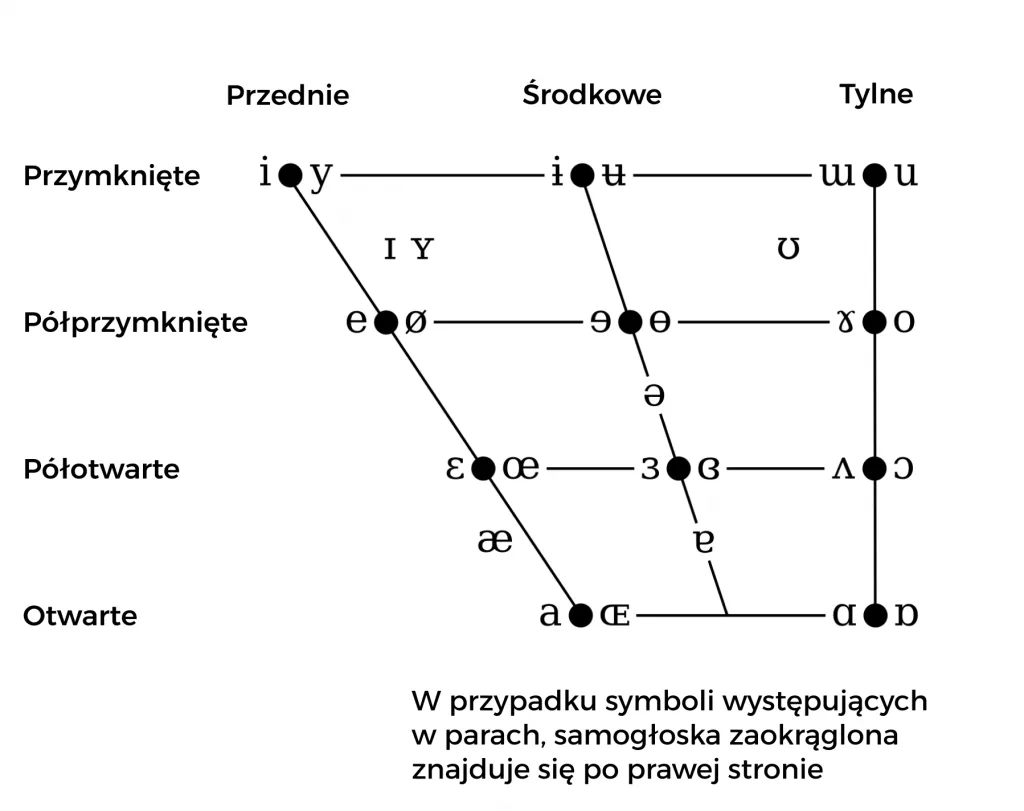
- Vowels — arranged on a quadrilateral that mirrors the position of the tongue in the mouth: high-front /i/ (as in see), high-back /u/ (as in too), open /a/, and in the middle the schwa /ə/, the unstressed vowel of about.
- Diacritics and suprasegmentals — small marks that add detail: [tʰ] is an aspirated t, [ẽ] a nasalized vowel, ː marks length, and ˈ marks stress, as in /əˈbaʊt/.
The IPA in dictionaries and pronunciation learning
The place most people meet the IPA is a dictionary. Learner's dictionaries of English (Oxford, Cambridge, Longman) and most British dictionaries give every headword an IPA transcription — water /ˈwɔːtə/ — while many American dictionaries, such as Merriam-Webster, use their own respelling systems instead (\ˈwȯ-tər\), which is worth knowing before you conclude a dictionary "doesn't use IPA".
Transcription comes in two depths, marked by different brackets. Slashes /…/ enclose a phonemic transcription: only the sound distinctions that matter in that language. Square brackets […] enclose a phonetic transcription with concrete detail — the same word water is /ˈwɔːtə/ phonemically in British English but [ˈwɔːɾɚ] in a detailed transcription of General American, with a flapped t. Dictionaries almost always use slashes, and also pick one reference accent, which is why two dictionaries can transcribe the same word differently without either being wrong.
Common misunderstandings
- The IPA is not the "Alfa, Bravo, Charlie" alphabet. That is the NATO spelling alphabet, used to spell letters out loud over the radio. The IPA does the opposite job: it writes down sounds, not letter names.
- The IPA is not "the English phonetic alphabet". It covers the sounds of all spoken languages; English dictionaries simply use a small subset of it.
- Familiar letter shapes have fixed IPA values, not English ones. /j/ is the first sound of yes, not of jam; /a/ is not the vowel of cat (that is /æ/).
- A transcription is not "the" pronunciation. It records one accent under one set of conventions — pronunciation varies between speakers in ways a broad transcription deliberately ignores.
What this means for language learning
You do not need to memorize the whole chart — nobody does. What pays off is learning the handful of symbols your target language actually uses, especially for sounds your own language lacks: once you can see in a dictionary that thin is /θɪn/ and this is /ðɪs/, you know they begin with two different consonants, which spelling alone never tells you. The IPA turns pronunciation from imitation-by-ear into something you can read, check and practice deliberately — exactly the role Passy's teachers intended in 1888, long before recordings were available. For a concrete example of IPA applied to a single language, see our guide to the German alphabet with phonetic notation for every letter, or our Norwegian pronunciation guide for English speakers, with IPA and minimal pairs you can play.
Frequently asked questions
How many symbols does the IPA have?
The current alphabet has 107 letters for consonants and vowels, plus 31 diacritics and 17 signs for stress, length, tone and intonation. Any single language needs only a small fraction — a typical English dictionary uses around 44 symbols.
Do I have to learn the whole IPA chart to benefit from it?
No. Learners typically need 30–50 symbols for one target language, and only the ones that mark sounds missing from their native language demand real attention. The full chart is a reference work for phoneticians, not a syllabus.
What is the difference between /slashes/ and [square brackets]?
Slashes mark phonemic transcription — only the distinctions that change meaning in a given language. Square brackets mark phonetic transcription — the concrete sounds in detail, including features like aspiration or flapping that the language treats as automatic.
Sources
- International Phonetic Association, History of the IPA
- International Phonetic Association, The International Phonetic Alphabet and the IPA Chart (chart revised to 2020)
- Handbook of the International Phonetic Association, Cambridge University Press, 1999
- Wikipedia, International Phonetic Alphabet and History of the International Phonetic Alphabet